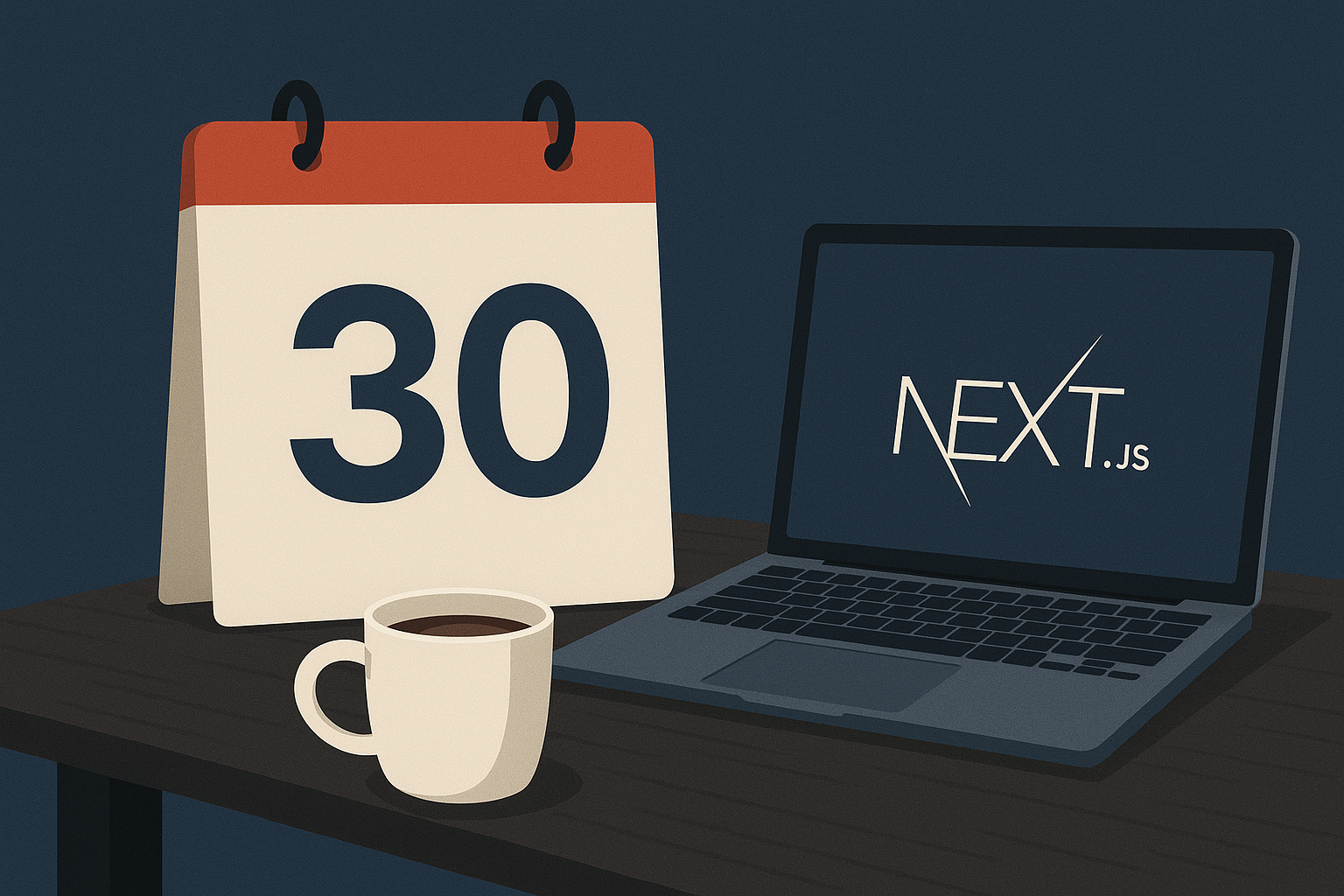
The Big Picture: A Learning Project with a Purpose
When I started brainstorming this 30-day challenge, my thoughts immediately turned to the end goal: creating something truly valuable and portfolio-worthy. This isn't just about writing a blog; it's a strategic project designed to showcase my technical skills, especially around current work implementations and integration.
The primary product will be a blog, but it's going to have a powerful, protected backend where users (or potential employers!) can actually review the code and processes behind different projects. It’s about letting people peek behind the curtain.
Why Next.js is the Engine
When it comes to frameworks, I usually prefer not to get too attached, but there’s a real beauty to Next.js that caught my attention for this project. Its capabilities for both static generation and server-side rendering make it perfect for this kind of structure. It lets me build a fast, public-facing site while also handling secure, complex user dashboards.
The Project Blueprint: Public vs. Private
To make this challenge manageable and impactful, I'm separating the site into clear routes:
Public (Open Access) | Protected (User Access Required) |
|---|---|
Landing Page (The welcome mat) | Dashboard (The main control panel) |
Blog (The main index of posts) | OAuth/Authentication Set-up (Review my secure login process) |
Blog [slug] (Individual articles) | Jobs Board Example (Demonstrate database and API handling) |
Projects (Overview of finished components) | Diagrammer/Idea Implementer (Show off a complex, interactive component) |
The real fun is in the protected-private routes. This is where I’ll be tackling things like setting up OAuth for secure logins, building out a working Jobs Board (to test database and API connections), and even creating a Diagrammer to demonstrate complex implementation ideas.
The Foundational Setup: Getting the Project Online
Before I write the first line of code for the blog itself, I need to get the basic infrastructure ready. Think of this as laying the perfect groundwork so the next 30 days can be focused entirely on building and learning.
Establishing the Code Hub: GitHub
I'm starting by setting up a GitHub repository. This isn't just about saving my files; it's about establishing version control. If I break something (and I will break something!), I can always revert to a previous, working state. It also serves as a fantastic, timestamped record of my progress, which is great for accountability and for sharing with others later.
Giving It a Home: Getting a Domain Name
A project like this needs a proper address. I’ll be registering a specific domain name (e.g., ertek.io). This makes the project look professional right out of the gate, and it's a huge motivator. It turns an "idea" into a real, accessible destination. Plus, it's just much cleaner than a long, generated URL!
Going Live: Deploying via Netlify
Finally, I’m connecting the GitHub repo directly to Netlify for deployment. I love Netlify because it's the simplest way to get a Next.js project online. It handles the build process automatically—I can push a change to GitHub, and within minutes, the update is live on the domain. This streamlines the whole workflow and lets me focus on coding, not server management.
So, there’s the start! Feel free to explore the site at ertek.io. As I dive into the code, I promise to keep you informed about all the inevitable chaos and breakthroughs. Wish me luck—and until next time, keep those fingers flying on the keyboard!
The rendering of images